
Why Understanding Your Kitchen Remodel Timeline Matters
A kitchen remodel is one of the most exciting — and most disruptive — projects you can take on as a homeowner. Your kitchen is the heart of your home, and when it's torn apart, daily life changes fast. Knowing what to expect and when to expect it can make the difference between a stressful experience and one you actually enjoy.
At Granite Foundation Pros, we walk every San Diego homeowner through a clear timeline before we start swinging hammers. Whether you're in La Mesa, Chula Vista, or Santee, the phases of a kitchen remodel follow a predictable pattern. Here's what a typical mid-range to full kitchen renovation looks like, broken down week by week.
Before the Clock Starts: The Planning Phase
Before any physical work begins, there's a critical planning stage that usually takes two to six weeks depending on the scope of your project. This is when you'll:
- Finalize your design and layout with your remodeling team
- Select materials — countertops, cabinets, flooring, fixtures, and appliances
- Obtain any necessary permits from the City of San Diego
- Order materials that may have lead times (custom cabinetry, for example, can take four to eight weeks to arrive)
This phase doesn't feel as exciting as demolition day, but it's the foundation of a smooth project. Rushing through planning is the number one reason kitchen remodels go over budget or fall behind schedule.
Week 1: Demolition and Rough Assessment
This is the week things get real. Your old cabinets, countertops, flooring, and sometimes walls come out. It's loud, it's dusty, and it's incredibly satisfying to watch your outdated kitchen disappear.
During demolition, your contractor will also get a clear look at what's behind the walls. This is when hidden issues like outdated wiring, water damage, or plumbing that doesn't meet current code tend to reveal themselves. A good remodeling company will communicate these findings immediately and present solutions without pressuring you into unnecessary upgrades.
Pro tip: Set up a temporary kitchen station in another room before demo day. A microwave, mini fridge, and a folding table will keep your household running smoothly.
Weeks 2–3: Rough-In Work (Plumbing, Electrical, and Framing)
Once the space is stripped down, the mechanical trades come in. This includes:
- Plumbing: Moving or adding water supply lines and drains for your new sink, dishwasher, or refrigerator ice maker
- Electrical: Updating wiring, adding circuits for new appliances, and installing boxes for outlets, switches, and under-cabinet lighting
- Framing: If your new layout involves moving walls, adding a breakfast bar, or opening up sightlines to an adjacent room, the framing happens now
This stage requires inspections from the city, and in San Diego, scheduling those inspections can sometimes add a day or two to the timeline. Your contractor should handle all of this on your behalf.
Weeks 3–4: Drywall, Insulation, and Prep
After inspections pass, the walls get closed up with new drywall. The drywall is taped, mudded, and sanded — a process that takes several days because each coat of joint compound needs to dry before the next one is applied. If insulation was removed or needs upgrading, it goes in before the drywall.
This phase can feel slow because you're watching people wait for things to dry. But patience here means smooth, flawless walls that look great for years to come.
Weeks 4–5: Painting, Flooring, and Cabinet Installation
Now the transformation starts to become visible. Walls get their finish coats of paint, and new flooring goes down. Whether you've chosen tile, luxury vinyl plank, or hardwood, this is when the room starts to feel like a real kitchen again.
Cabinet installation is a major milestone. Seeing your new cabinetry go up on the walls gives you the first real sense of your finished kitchen. Proper installation is critical — cabinets need to be perfectly level and securely anchored, especially in older San Diego homes where walls and floors aren't always perfectly square.
Weeks 5–6: Countertops, Backsplash, and Fixtures
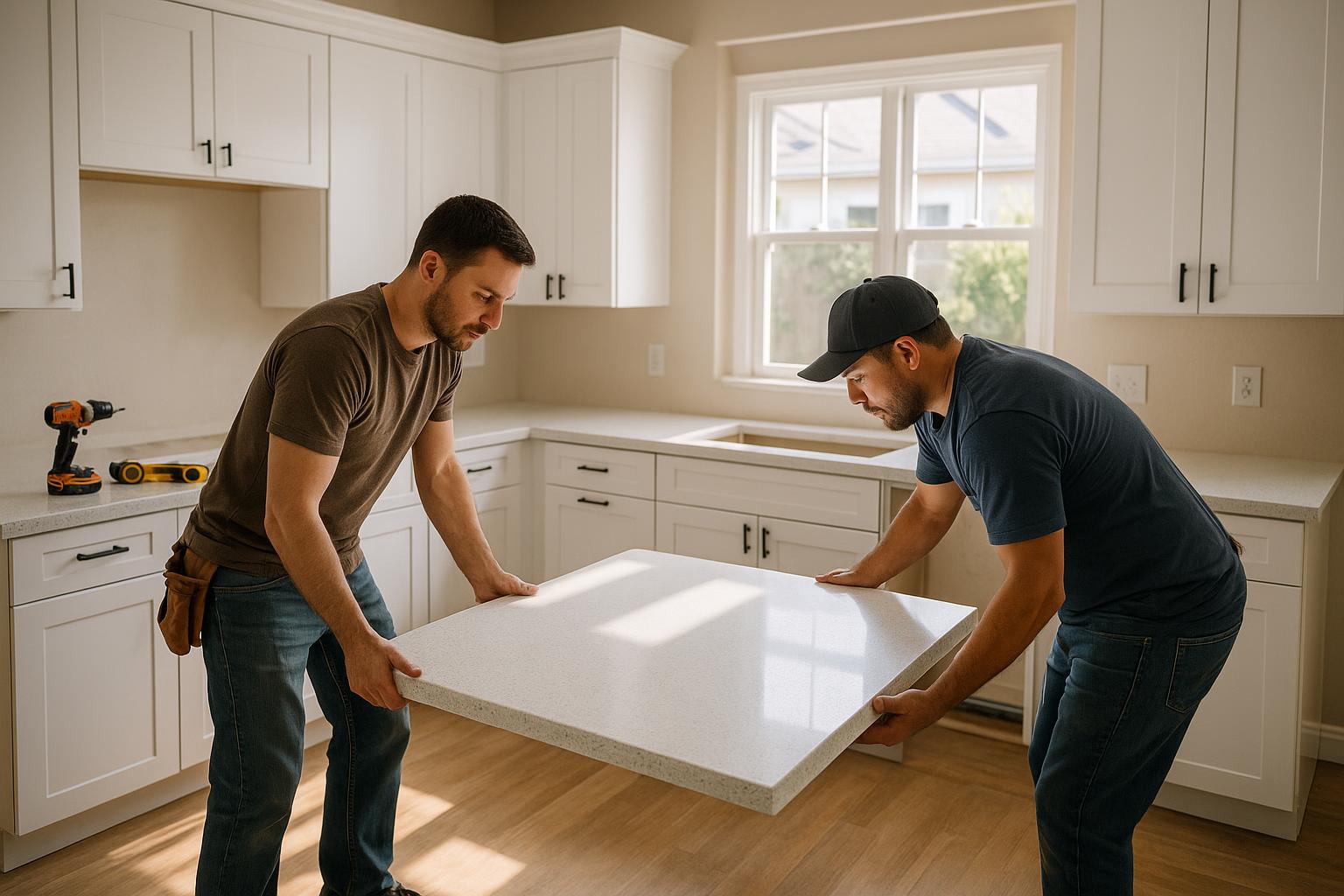
Once cabinets are set, your countertop fabricator will do a final template measurement and then return a few days later to install your new surfaces. Granite, quartz, and marble countertops are fabricated to exact specifications, so this step can't happen until cabinets are fully in place.
While you're waiting on countertops, the backsplash tile can often be started. After countertop installation, your plumber and electrician return to connect:
- Sinks and faucets
- Dishwasher and garbage disposal
- Range hood and cooktop connections
- Outlets and light switches with their finish plates
This is also when hardware goes on the cabinets — those handles and pulls that give your kitchen its personality.
Week 6–7: Appliances, Final Details, and Punch List
Your new appliances get delivered and installed. Final trim work, caulking, and touch-up painting happen throughout the space. Then comes the punch list — a detailed walkthrough where you and your contractor go through every inch of the kitchen together.
The punch list is your opportunity to point out anything that needs adjustment: a cabinet door that's slightly off, a paint touch-up behind a fixture, or caulk lines that need cleaning up. A reputable remodeling company welcomes this step because it's how they deliver a finished product they're proud of.
Factors That Can Affect Your Timeline
Every kitchen remodel is unique, and several factors can push your timeline shorter or longer:
- Scope of work: A cosmetic refresh with new cabinets and countertops takes less time than a full gut renovation with layout changes
- Material lead times: Custom or specialty items can add weeks to your schedule if not ordered early
- Permit and inspection delays: These vary by jurisdiction across San Diego County
- Surprises behind the walls: Older homes in neighborhoods like El Cajon or National City may have outdated plumbing or electrical that needs attention
- Decision-making speed: Homeowners who finalize selections early keep the project moving
How to Keep Your Kitchen Remodel on Track
Based on our experience remodeling kitchens across San Diego, here are the best things you can do as a homeowner to help your project stay on schedule:
- Make all design decisions before demolition begins. Changing your mind mid-project is the biggest cause of delays.
- Order materials early. If your cabinets have a six-week lead time, that clock should start ticking during the planning phase, not after demolition.
- Communicate openly with your contractor. If something concerns you, say it early. Small issues are easy to fix; big issues that go unspoken become expensive.
- Be flexible with minor delays. Weather, inspections, and supplier hiccups happen. A few days here and there are normal.
Ready to Start Planning Your Kitchen Remodel?
A well-managed kitchen remodel typically takes six to eight weeks of active construction, with a few weeks of planning beforehand. It's a significant commitment, but the result — a beautiful, functional kitchen tailored to the way you live — is worth every day of the process.
At Granite Foundation Pros, we specialize in making kitchen remodels as smooth and predictable as possible for homeowners throughout San Diego, La Mesa, Chula Vista, Santee, and the surrounding communities. If you're ready to start the conversation, we'd love to hear about your project and give you an honest, detailed timeline you can count on.